Torrance Water Rescue · Hardwood floors
Hardwood Floor Water Damage in Torrance, CA
Last updated: November 13, 2026
Hardwood shows water by changing shape. Boards cup, edges stain dark, or a finish turns cloudy. Those signs can appear after a supply leak, an appliance overflow, or a slab leak that wetted the floor from below. Sanding the floor while it is still wet locks the water in.
Key takeaways
- Hardwood shows water by changing shape. Boards cup, edges stain dark, or a finish turns cloudy. Those signs can appear after a supply leak, an appliance overflow, or a slab leak that wetted the floor from below. Sanding the floor while it is still wet locks the water in.
- Torrance Water Rescue is local to Torrance and open 24/7.
- Call now and describe which rooms are wet.
Free call. Torrance Water Rescue picks up 24/7.
All servicesTorrance Water Rescue: local to Torrance, focused on homes, open 24/7.
Phone lines: Open 24/7
For homeowners and their houses.
Torrance Water Rescue lines up local restoration pros who dry the wood and the subfloor before any repair.
The EPA advises homeowners to dry within 24-48 hours so wet materials are less likely to grow mold.
For a closer look nearby, see hardwood floors in Carson homes, hardwood floors in Lomita homes, and hardwood floors in Lawndale homes.
Hardwood Floor Water Damage Help in Torrance
Wood swells when one face is wetter than the other. Edges rise, which is cupping, or the center rises later as the board dries unevenly, which is crowning. Both mean the moisture is not finished moving. Covering the floor with rugs, fans pointed at the finish only, or a coat of polyurethane traps that moisture. On a slab, water can also be under the boards with no crawlspace to see it. Drying has to reach that side, not only the finish.
What to do first
Keep yourself safe, then call Torrance Water Rescue. We take it from there with you.
Stop the water at the source
Close the fixture, appliance, or house shutoff that is feeding the floor.
Do not cover the floor to hide the water
Rugs and plastic trap moisture in the wood and the subfloor.
Leave cupped boards in place
Sanding or replacing boards before the wood is dry makes the repair larger.
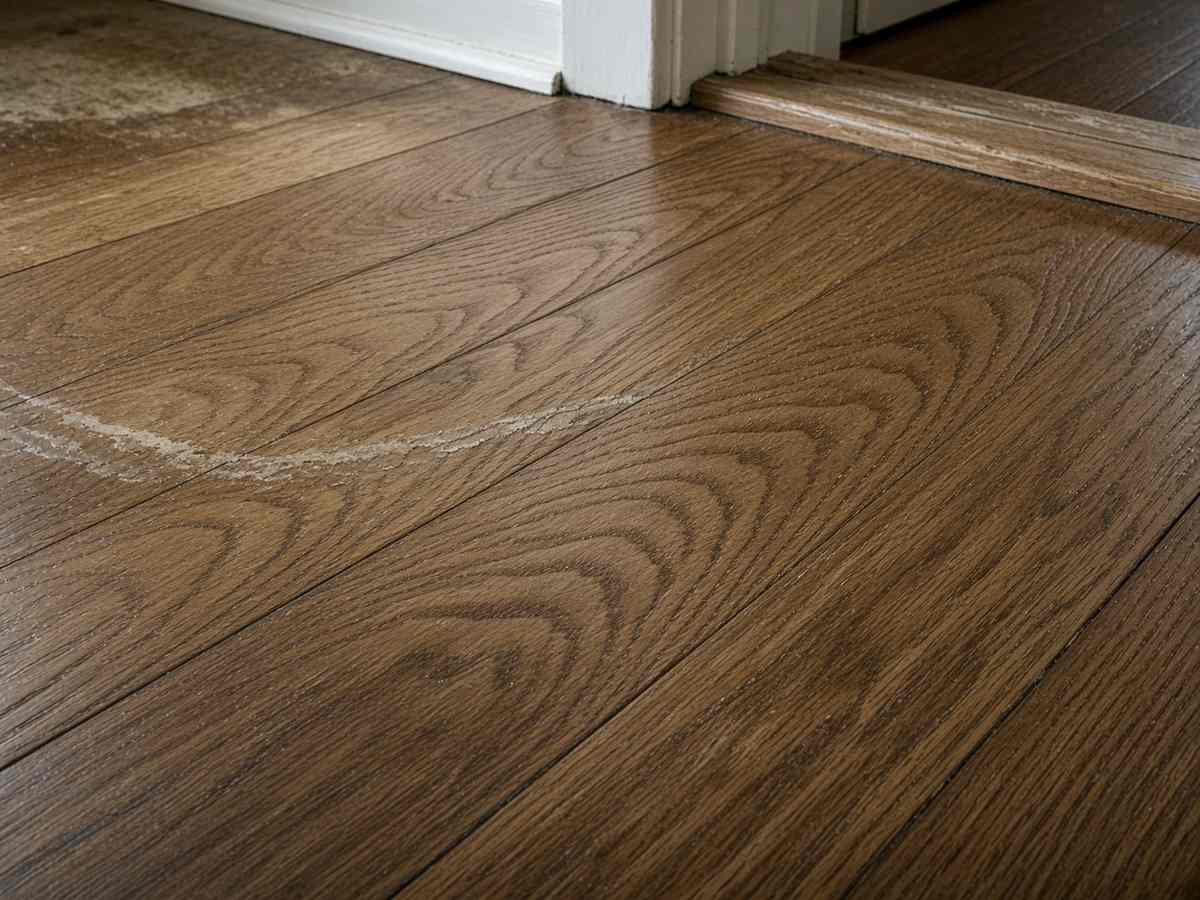
Drying a hardwood floor before any repair
- 1
The leak is stopped so new water is not feeding the boards.
- 2
A restoration pro meters the wood and, where the floor can be opened safely, the subfloor.
- 3
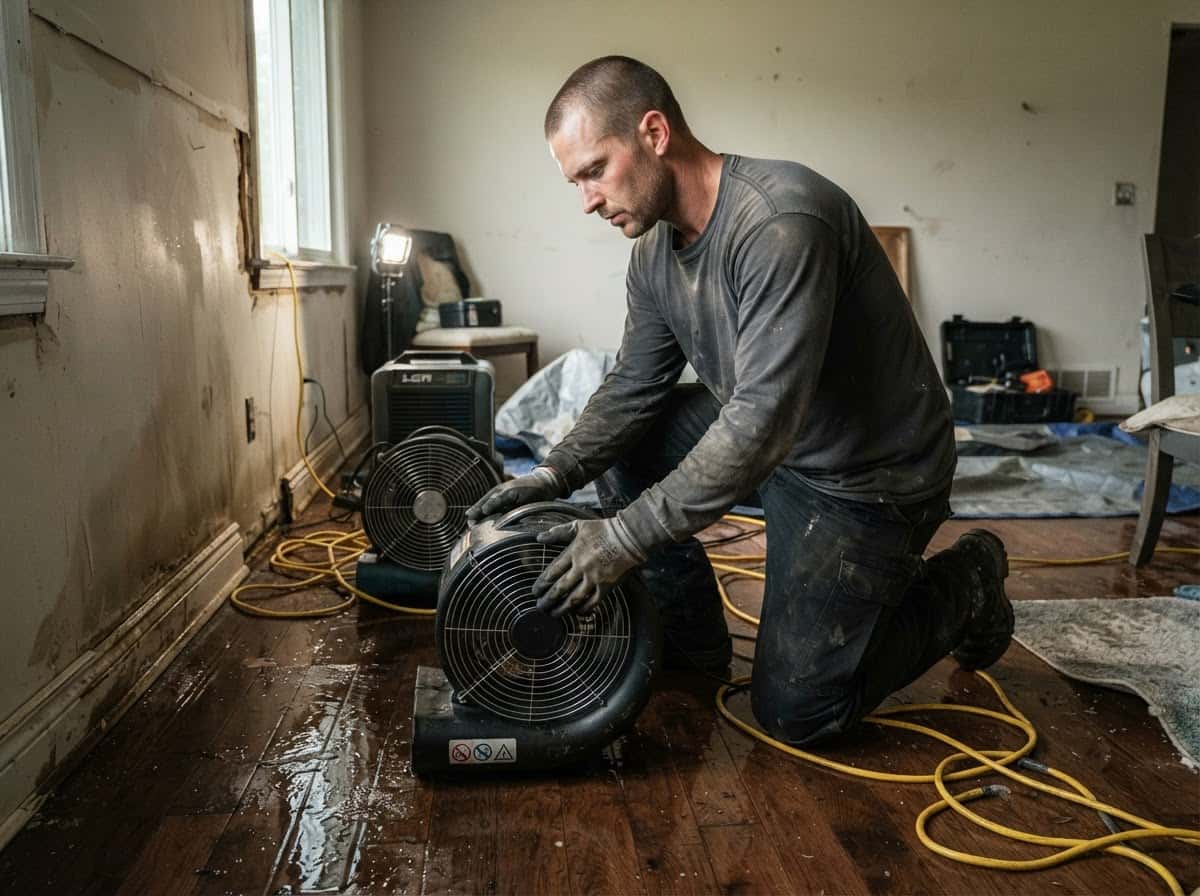
Air movers and dehumidifiers run until the readings level off. Boards that will not return are marked, not sanded yet.
- 4
Repair or replacement of boards happens after the floor is dry, as a separate step.
Common causes
- A supply-line or appliance leak that sat on the finish
- A slab leak that wetted the boards from below
- A toilet or sink overflow that ran under a vanity into the hallway
- Wet mopping that soaked an older finish until the wood took on water
Signs to act on
- Boards with raised edges
- A dark line at the seams
- A musty odor at the baseboard with no puddle
- Finish that turned white or cloudy in one area
Floors on a slab
Many houses in this area sit on a concrete slab, so there is no crawlspace under the hardwood. A leak from below shows up as a warm spot, a dark seam, or cupping with no puddle on top. Drying that floor means confirming the plumbing leak is stopped, then drying the wood from the room side and opening boards only where the meter says the water is trapped.
The EPA's 24-48 hour drying guidance still applies. Wood that has been wet longer can still be dried, but the chance that boards must be replaced goes up. That is a reason to meter the floor, not a reason to sand it immediately.
What we will not tell you on the phone
We will not say the floor can be saved, name a price per square foot, or tell you to pull boards up yourself. A local restoration pro makes that call after readings. You verify license and insurance before work starts. This page is an explanation of the sequence, not a quote.
Cupping is the edges of a board rising because the bottom or the face took on water faster than the other side. Crowning is the center rising later, often after the board dried unevenly or was sanded too soon. Neither shape tells you, by itself, that the floor must be replaced. It tells you the moisture is still moving. Air has to cross the floor, a dehumidifier has to pull that moisture out of the room, and a meter has to show the readings leveling off before anyone talks about sanding. On a slab there is no crawlspace to fan, so the room side is the drying path. Read the steps, stop the water, leave the boards in place, and phone us to be connected with a local restoration pro.
Hardwood Floor Water Damage in Torrance, CA FAQ
Can cupped hardwood lay back down?
Sometimes, if the water was limited and the boards are dried evenly. Sometimes the boards stay cupped or crown after they dry and have to be repaired. Nobody can promise which one from a photo. The first step is still to stop the water and dry the floor.
Should I sand the floor while it is wet?
No. Sanding wet wood removes material that might have returned, and it does not dry the subfloor. Wait until moisture readings are stable.
Is a dehumidifier enough by itself?
Usually not. Air has to move across the floor, and the water under the boards has to have a path out. A restoration pro places air movers with the dehumidifier and checks the readings, instead of setting one machine in the middle of the room.
Does this include refinishing?
No. Drying is restoration. Sanding and refinishing are a later trade, after the wood is dry. Torrance Water Rescue focuses on the restoration side and does not refinish floors.
Related water damage help
Before you call: straight answers
Who answers the phone?
A virtual assistant answers every call, 24/7. It asks where the water is, how long it has been there, and whether you own the house. Then it passes your details to an independent local restoration pro.
Will I get a price on the phone?
No. A local restoration pro gives you a price after seeing the house. The call itself is free.
Do I have to hire the pro you connect me with?
No. You hear the price first, and then you decide. Any contract is between you and that pro.
Is the pro licensed?
Licensed, insured local pros. Ask for the CSLB number. You can look it up at cslb.ca.gov before work starts.
Will you deal with my insurance company?
No. We do not bill insurers or handle claims. The pro can give you photos, readings, and drying records for your claim.
Do you fix the leak too?
Fixing a pipe is a plumber's job. The restoration pro removes the water, dries the house, and cleans up.
How soon can someone come out?
We do not promise an arrival time. It depends on which local pros are free when you call.
Phone lines: Open 24/7
Hardwood floor help for your home
Stop the water, leave the boards in place, and call and we will line up local drying help.
Call nowFor homeowners and their houses.